
When Denominations Discuss Unity: Understanding Merger Talks, Full Communion, and Church Cooperation
Church unity conversations may involve mergers, full communion, shared ministry, theological dialogue, or institutional cooperation. Responsible reporting must explain the difference and avoid announcing agreements before governing bodies approve them.
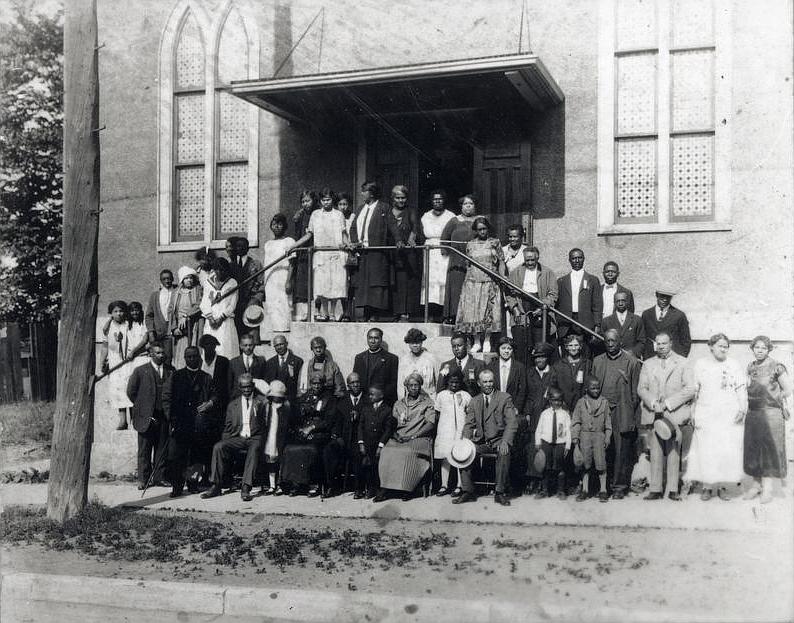
Church mergers are often discussed as signs of decline, but they may also become acts of courage, stewardship, and renewed mission. As attendance patterns change, buildings age, ministry expenses rise, and communities reorganize around new social realities, churches must decide whether maintaining every inherited structure is still the best way to serve the people God has entrusted to them.
The church cannot measure faithfulness only by whether the same congregation continues meeting in the same building under the same institutional name. Buildings carry sacred memory, but the mission of the church is larger than any property. Sanctuaries hold baptisms, funerals, weddings, revivals, choir anniversaries, community meetings, and generations of prayer. Those memories deserve honor, yet honoring the past does not require a congregation to become imprisoned by a structure that no longer supports its ministry.
A merger may allow two congregations to combine leadership, property, finances, technology, music, education, administration, and community relationships. It may also create a healthier environment for children, young adults, families, older members, clergy, and volunteers who have been carrying too much responsibility with too few resources. The important question is not merely whether two churches can survive separately. The deeper question is whether they can serve more faithfully together.
Jesus prayed that his followers would be one so that the world might believe that he had been sent by God. Christian unity is therefore not an ornamental idea. It is part of the public witness of the church. When congregations refuse all cooperation because of pride, personality, tradition, or institutional competition, the surrounding community may see separation where the gospel calls for reconciliation.
Unity does not require every congregation to become identical. First Corinthians 12 describes one body with many members, each carrying a different function. A merger or ministry partnership should not erase the legitimate gifts, histories, worship traditions, and cultural identities of the participating churches. Healthy unity gathers those differences into a stronger shared mission.
The history of the British Methodist Episcopal Church in Canada demonstrates how social crisis can produce new forms of Christian unity and ministry. After the passage of the United States Fugitive Slave Act of 1850, Black members of African Methodist Episcopal congregations in Canada faced serious concerns about traveling to American conferences. Many also wanted an ecclesial identity more closely connected to the nation in which they had found greater freedom and legal protection. In 1856, most Canadian AME congregations separated from the American conference and organized the British Methodist Episcopal Church.
This new denominational structure was not created merely because leaders desired another church name. It emerged from danger, migration, political reality, racial injustice, and the need for Black Christian communities to organize ministry in a way that protected their people. Social discomfort created new unity because the inherited structure could no longer respond adequately to the circumstances of the community.
Salem Chapel in St. Catharines, Ontario, became one of the most important examples of this ministry. Built around 1855 to serve a growing community of Black refugees arriving through the Underground Railroad, the church became a center of abolitionist activity, civil rights work, shelter, worship, and community development. Parks Canada recognizes Salem Chapel as a national historic site because of its relationship to the anti-slavery movement, the early Black community in Ontario, and Harriet Tubman.
Tubman lived in St. Catharines during part of the 1850s and was closely associated with Salem Chapel. She worshiped within the AME and BME community while continuing her work of guiding freedom seekers into Canada and helping newly arrived Black families establish their lives. The church was not only a place of Sunday worship. It became an environment of spiritual formation, freedom work, civic action, mutual aid, and social survival.
That history offers an important lesson for contemporary churches. Ministry structures must respond to the real conditions affecting people. The British Methodist Episcopal Church developed because Black Christians needed a structure capable of addressing freedom, safety, racial injustice, migration, worship, and community organization. The new model did not abandon the gospel. It reorganized ministry around the urgent needs of the people.
Churches today face different conditions, but the principle remains relevant. Communities are experiencing shifting populations, rising housing costs, digital communication, changing work schedules, transportation barriers, declining trust in institutions, family pressures, social isolation, and new expectations for access. Congregations that ignore these conditions may preserve their schedules while losing their ability to reach people.
A church merger should therefore be approached as more than an emergency financial transaction. It can become an opportunity to ask what ministry should look like in the next generation. Two congregations may discover that they do not need two separate administrative offices, two underfunded youth programs, two small media departments, two struggling music ministries, and two buildings operating below capacity. They may be able to create one stronger ministry environment while preserving the histories and contributions of both communities.
This approach requires leaders to move beyond the fear that cooperation automatically means personal loss. A pastor may fear losing a pulpit. A bishop may fear losing jurisdiction. A trustee board may fear losing control of property. A choir may fear losing its identity. Longtime members may fear that their relatives’ sacrifices will be forgotten.
These concerns should not be dismissed. A merger process must include historical preservation, pastoral care, financial transparency, legal review, congregational participation, and a clear plan for honoring both communities. Names, photographs, records, memorials, music, ministries, and institutional histories should be protected. Unity should not require one congregation to disappear beneath the brand of another.
At the same time, leaders must be honest about whether maintaining separate institutions is serving the mission or merely protecting familiar positions. The church exists to equip people, proclaim the gospel, serve communities, form disciples, preserve truth, care for families, and demonstrate the Kingdom of God. An organizational structure is valuable only to the extent that it supports that calling.
Changing attendance patterns also require churches to rethink what participation means. Sunday attendance remains important, but it is no longer the only evidence of connection. Some people participate through weekday teaching, online worship, mentoring, community service, digital groups, counseling, music programs, educational initiatives, podcasts, conferences, and family ministries. A person may first encounter a church through a livestream, an article, a short video, a community meal, a book, or a mobile application.
This does not mean that digital participation should replace embodied fellowship. The church is still a people who gather, serve, worship, pray, learn, and care for one another. Digital ministry should expand access and strengthen relationships rather than reduce the church to passive viewing.
A merged or cooperating church can create a more comprehensive ministry model by combining physical and digital participation. One campus may become the primary worship center. Another building may become an education center, community kitchen, media studio, counseling center, youth facility, business incubator, senior ministry center, or transitional support site. A congregation with strong teaching may serve several campuses digitally. A church with a successful music ministry may train worship leaders across the partnership. A congregation with administrative strength may provide shared financial, legal, and technological support.
The future may also include churches that share ministry without completing a formal merger. Congregations can cooperate through shared staff, joint worship, leadership training, pulpit exchange, common technology, community service, theological education, media production, youth ministry, and purchasing agreements. Some churches may maintain separate names and governance while building a common ministry infrastructure.
This kind of cooperation requires clarity. Churches must decide who has authority, who owns property, how money is managed, how clergy are appointed, how members are represented, and how disagreements will be resolved. A vague promise of unity is not enough. Spiritual language should not be used to conceal financial pressure, leadership ambition, or legal uncertainty.
Acts 15 provides a biblical model for serious institutional discernment. When the early church faced a dispute that affected doctrine, community identity, and the inclusion of Gentile believers, leaders gathered, heard testimony, considered the matter, reached a judgment, and communicated their decision. The process was spiritual, theological, administrative, and public.
Churches considering merger or cooperation should follow a similarly disciplined process. They should listen to members, study the community, examine financial realities, review legal obligations, preserve institutional history, identify theological agreements and differences, and communicate honestly. Prayer should lead to responsible action rather than replace it.
Attendance challenges should also cause churches to examine the quality of the ministry environment. People may not be leaving only because culture has become less religious. Some are leaving because they do not experience meaningful discipleship, trustworthy leadership, family support, theological depth, community service, or opportunities to participate. A merger that combines two weak systems without addressing their weaknesses will not produce renewal.
The purpose of restructuring must be transformation.
Churches must ask whether their worship is accessible without becoming shallow, whether their teaching forms mature believers, whether young people are trusted with meaningful responsibility, whether families receive practical support, whether members understand the mission, whether the community knows the church exists, and whether technology is being used responsibly.
A new ministry model may require fewer programs and stronger outcomes. Churches do not need to continue every annual event merely because it has always existed. They may need to replace fragmented activities with a clear pathway of discipleship, partnership, leadership, service, and community involvement.
Leadership structures may also need to change. A merged church should not simply create more titles for the same group of people. It should identify gifts, establish accountability, develop younger leaders, include women and lay members meaningfully, and create a succession plan. The new organization must be capable of continuing beyond its founding personalities.
The economic advantages of cooperation can be significant, but financial savings should serve ministry rather than become the only objective. Shared insurance, accounting, technology, purchasing, communications, media, transportation, and staffing may release resources for outreach, education, missions, youth, families, and community development.
Property should also be reconsidered as a ministry asset. An underused building may be able to host affordable childcare, workforce training, counseling, community meals, temporary shelter, educational programs, health initiatives, reentry support, arts education, or shared office space for nonprofit work. The question should not be whether the church can keep every room unchanged. The question should be how the property can serve the people.
The history of Salem Chapel shows that a church building can become a spiritual home, a center of justice, a place of refuge, and an organizing environment for freedom. Its significance did not come from architecture alone. It came from the people who used that space to worship, protect one another, resist injustice, and build community.
Contemporary churches should seek the same depth of purpose. A sanctuary should be more than a room occupied for a few hours each week. It should be part of an environment that strengthens families, teaches truth, preserves history, develops leaders, creates solutions, and responds to the conditions affecting the community.
A merger cannot solve every problem. It may produce conflict if leaders rush the process, conceal information, ignore theological differences, or treat one congregation as inferior. Some partnerships should not proceed. Churches must evaluate whether their missions, values, leadership cultures, financial practices, and theological commitments can function together with integrity.
But fear should not prevent serious conversation.
The church has always adapted its methods in response to mission. Early believers met in homes, public spaces, synagogues, and places of instruction. Christian communities developed networks for teaching, care, travel, correspondence, and resource sharing. Paul’s letters demonstrate how ministry could connect communities across distance without requiring every congregation to exist in the same location.
The modern church must recover that flexibility.
A congregation may be one church in several locations. Several churches may share one campus. A digital congregation may connect people throughout the week while directing them toward local relationships. A denominational partnership may preserve distinct traditions while creating common systems for education, missions, media, and community service.
The goal is not to make the church resemble a corporation. The goal is to ensure that the church’s organization serves its calling.
Ephesians 4 teaches that ministry gifts are given to equip the saints for the work of ministry and to build up the body of Christ. Every structure should be evaluated according to that purpose. Does it equip people? Does it build the body? Does it produce maturity? Does it prepare believers to serve?
If two churches can accomplish that work more effectively together, merger should not be treated as defeat.
It may be resurrection.
It may allow a congregation to release a structure that has completed one assignment and enter a new form of ministry. It may preserve history by placing it within a stronger future. It may create the resources necessary to serve a changing community. It may replace institutional competition with shared responsibility.
Social discomfort has often forced the church to discover new unity. The Black freedom seekers who helped build the British Methodist Episcopal tradition did not create new structures because change was comfortable. They reorganized because the conditions surrounding them demanded a ministry capable of protecting freedom, building community, and sustaining faith.
Churches facing declining attendance, rising costs, leadership shortages, and changing communities should not imitate that history carelessly, but they can learn from its courage.
The church must be willing to ask whether its present structure is serving its present mission.
Some congregations will remain independent and experience renewal.
Some will develop multi-site models.
Some will share buildings and staff.
Some will create full digital ministry environments.
Some will enter cooperative agreements.
Some will merge.
The faithful decision will not be the same for every church.
The central responsibility is to discern how the people, property, history, leadership, technology, and resources entrusted to the church can best serve God and the community now.
Unity is not simply the combining of institutions.
It is the willingness to place mission above possession, service above status, and the future of the people above the preservation of familiar structures.
Sources and Documentation
John 17:20-23. First Corinthians 12:12-27. Acts 15:1-35. Ephesians 4:11-16. Salem Chapel British Methodist Episcopal Church, “Community History,” accessed July 15, 2026. Parks Canada, “Salem Chapel British Methodist Episcopal Church National Historic Site,” modified January 22, 2025. Parks Canada, “Harriet Tubman National Historic Person,” modified January 22, 2025.

Loading comments…