
A Title Is Not a Succession Plan: Rebuilding Denominational Movements for a Digital and Demanding Future
A title can be transferred in a ceremony, but vision, culture, institutional memory, and leadership readiness must be intentionally built. This editorial confronts the difficult work denominational movements must undertake to survive and serve a digital future.
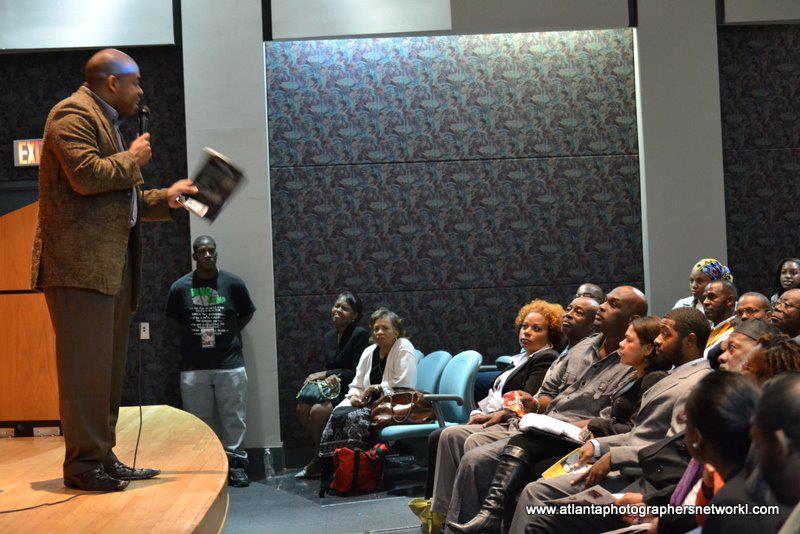
The Tough Work of Rebuilding Denominational Movements for a Digital and Demanding Future Faith Mass
There is a difficult truth confronting many denominational movements in this generation: a title is not a succession plan. The election of a new moderator, the appointment of a new pastor, the consecration of a new bishop, or the installation of a new president does not guarantee the continuation of a movement. Titles can be transferred in a ceremony. Institutional wisdom cannot. Authority can be conferred in a public service. Organizational maturity cannot. A robe, ring, chair, seal, or office may identify who has been selected to lead, but none of those symbols can replace the demanding work of preparing a person, preserving a culture, transferring institutional memory, and rebuilding systems for a future that will not resemble the past.
As a consultant and assistant to moderators, pastors, presidents, and presiding bishops, I have observed devoted leaders who genuinely desire to strengthen their organizations. I have also watched many of them purchase courses without a clear implementation strategy, hire staff and consultants without first identifying the actual organizational problem, subscribe to platforms they do not fully use, and compete for advertising space on the very digital systems they should have been building for themselves. These actions are not always evidence of laziness or bad motives. Often they are evidence of institutional anxiety. Leaders know that the world has changed, but many have not yet developed the language, architecture, or courage required to change with it.
This is not an indictment of one denomination, one communion, or one generation of leaders. It is a warning about a pattern. Many movements were built for the comforts of the past rather than the demands of the future. Their systems were designed for annual meetings, printed programs, mailed correspondence, regional travel, physical attendance, predictable giving patterns, and the authority of centralized offices. Those models served previous generations and should not be mocked. They carried churches through difficult periods, preserved traditions, educated ministers, supported missions, and created forms of belonging that mattered deeply. The failure is not that those systems existed. The failure is that too many organizations assumed those systems would remain sufficient forever.
The future faith mass is already forming. It is digitally connected, geographically scattered, financially cautious, institutionally skeptical, culturally demanding, and accustomed to immediate access. People now encounter ministries before they enter sanctuaries. They investigate leaders before they join organizations. They compare theology, communication, transparency, responsiveness, and digital competence before they commit their time or resources. A generation raised within searchable environments does not automatically submit to inherited titles. It looks for demonstrated trust, visible competence, accessible formation, and meaningful participation.
Many denominations continue speaking to this generation as though the primary challenge is getting people back into old rooms. The deeper challenge is becoming the kind of movement that deserves their participation. The future will not be secured by louder invitations into outdated systems. It will require the rebuilding of the systems themselves.
Scripture presents succession as formation, not replacement. Moses did not merely announce Joshua at the end of his life. Joshua had already served near Moses, witnessed leadership under pressure, learned the weight of communal responsibility, and stood within the movement before being entrusted with its future. Elijah did not leave Elisha only a title. He left him a pattern of presence, service, observation, testing, and spiritual inheritance. Paul did not merely name Timothy as a successor and disappear. He instructed him, corrected him, encouraged him, warned him, and charged him to reproduce the same process in others. Paul wrote, “What you have heard from me in the presence of many witnesses entrust to faithful people who will be able to teach others also.” The apostolic pattern contains multiple generations in a single sentence: Paul, Timothy, faithful people, and those they would teach. Succession is therefore not the replacement of one personality by another. It is the faithful multiplication of conviction, competence, character, and capacity.
The Church has too often reduced succession to election calendars and ceremonial transitions. A nomination process is not a leadership pipeline. An episcopal election is not institutional preparation. A pastoral search is not cultural transfer. A consecration service is not organizational development. These may be important moments, but they cannot carry the weight of work that should have begun years earlier.
When an organization waits until a leader is retiring, ill, exhausted, controversial, or deceased before considering what comes next, it does not have succession. It has emergency replacement. That difference matters. Emergency replacement asks, “Who can take the chair?” Succession asks, “Who has been formed to carry the mission?” Emergency replacement seeks availability. Succession develops readiness. Emergency replacement protects the immediate appearance of continuity. Succession protects the long-term substance of the movement.
Theological tradition has always understood that leadership exists within a body larger than the leader. Cyprian of Carthage wrote that “the episcopate is one,” with each bishop holding a part for the sake of the whole. His concern was not personal prestige but unity, shared responsibility, and the integrity of the Church’s witness. A title detached from the whole body becomes dangerous because it encourages the illusion that the office exists for the advancement of the officeholder rather than the preservation and service of the community.
Augustine’s famous confession that the human heart remains restless until it rests in God offers another necessary correction. Institutions can become restless too. They can chase relevance, recognition, technology, money, and visibility while losing their theological center. A movement may purchase every modern tool and still remain structurally unprepared. It may redesign its logo, update its website, livestream its services, and launch social media campaigns while leaving governance, formation, archives, finances, leadership development, pastoral care, and institutional memory untouched.
This is one of the most common errors in denominational rebuilding. Leaders mistake digital activity for digital transformation. Posting is not infrastructure. Streaming is not strategy. Buying software is not modernization. Running advertisements is not audience ownership. Hiring a media person is not a communication system. Purchasing a course is not organizational learning. Technology can accelerate a healthy movement, but it can also expose the weaknesses of an unhealthy one more quickly.
I have seen organizations buy courses because another ministry appeared successful. I have seen them hire people because those individuals had large followings, impressive titles, or persuasive language. I have seen them spend money competing for attention on platforms controlled by companies whose priorities had nothing to do with the Church’s mission. I have watched them rent digital reach instead of building durable digital relationships. None of this is inherently wrong. Courses can help. Consultants can help. advertising can help. Skilled staff can help. The problem arises when leaders purchase isolated solutions without diagnosing the system that must receive them.
A movement that has not clarified its mission will misuse marketing. A movement without governance discipline will misuse technology. A movement without an editorial process will produce confusion at scale. A movement without financial transparency will amplify distrust. A movement without theological coherence will turn digital communication into competing personal brands. A movement without leadership formation will simply produce a faster cycle of unprepared successors.
The biblical image of stewardship requires more than possession. It requires preparation, multiplication, and accountability. Jesus’ parable of the talents condemns the servant who preserves what he received without developing it. Preservation without multiplication is not faithfulness. It is fear disguised as caution. This matters for denominations that believe honoring their founders means freezing their methods. The founders of great movements were rarely preservationists in their own generation. They were builders, reformers, organizers, publishers, educators, missionaries, and institutional innovators. To preserve only their ceremonies while refusing their courage is not honor. It is imitation without inheritance.
Dietrich Bonhoeffer argued that the Church is truly the Church when it exists for others. That principle exposes the weakness of institutional self-preservation. A denomination that spends all of its energy maintaining offices, protecting titles, financing internal gatherings, and defending inherited structures may remain administratively active while becoming missionally absent. The question is not whether the institution can survive. The question is whether its survival serves the world Christ sent it to reach.
The future faith mass will not be satisfied with organizations that exist mainly to perpetuate themselves. It will demand movements that can demonstrate why they matter, whom they serve, what transformation they produce, how they steward resources, how they form leaders, and how they carry the Gospel into the actual environments where people live.
This is where many denominational leaders experience pain. They inherit buildings but not digital infrastructure. They inherit offices but not operational manuals. They inherit constitutions but not usable governance systems. They inherit traditions but not documented institutional memory. They inherit annual events but not continuous discipleship pathways. They inherit mailing lists but not functioning data systems. They inherit titles but not trained teams. They inherit expectations from the past and demands from the future at the same time.
The pressure produces predictable reactions. Some leaders become defensive. Some imitate larger churches. Some purchase more technology. Some create new departments without defining their authority. Some hire young people and assume youthfulness automatically equals digital competence. Some hire consultants and ignore their recommendations. Some launch platforms without assigning anyone to maintain them. Some spend heavily on advertising while neglecting the quality of the experience people encounter after clicking the advertisement. Some create new titles because titles feel like progress when systems are harder to build.
Yet the future cannot be titled into existence.
Nehemiah offers a more demanding model. He did not arrive in Jerusalem and immediately announce a new office. He inspected the damage. He assessed the walls. He understood the opposition. He organized people by families and assignments. He rebuilt physical boundaries, restored worship, confronted economic injustice, renewed covenant, and established administrative order. His leadership joined spiritual burden with structural intelligence.
The Church often quotes, “Let us rise up and build,” while ignoring the inspection that came before the building. Nehemiah walked through the ruins at night. He looked carefully before he spoke publicly. That sequence matters. Leaders who announce solutions before understanding the damage often waste the resources of the people they were called to serve.
A faithful rebuilding process begins with truth. What has actually failed? Which practices no longer serve the mission? What knowledge lives only in the minds of retiring leaders? Which departments duplicate one another? Which offices exist because of history rather than present necessity? Which financial obligations consume resources without producing mission? Which traditions carry theological meaning, and which continue only because no one wants to challenge them? Which leaders have authority without measurable responsibility? Which younger leaders are being used for labor but excluded from formation and decision-making? Which digital platforms are rented, and which relationships are owned? Which communities are being reached, and which are merely being counted?
These questions are painful because they threaten comfortable narratives. Denominations often prefer inspirational language to institutional truth. They celebrate longevity without examining vitality. They report attendance without evaluating formation. They announce appointments without assessing readiness. They measure offerings without measuring trust. They count churches without asking how many are healthy. They celebrate new programs without determining whether previous programs worked.
The prophets did not allow Israel to confuse activity with faithfulness. Isaiah condemned worship separated from justice. Jeremiah challenged leaders who cried “peace” where there was no peace. Amos rejected religious gatherings that concealed corruption. Jesus confronted religious leaders who maintained public honor while neglecting weightier matters. The Church therefore has no theological permission to protect appearances at the expense of truth.
A title without accountability becomes ornament. A title without preparation becomes exposure. A title without a team becomes exhaustion. A title without systems becomes instability. A title without theological depth becomes branding. A title without succession becomes a countdown to crisis.
The future requires denominations to recover the ministry of documentation. Scripture repeatedly joins leadership with writing. Moses wrote the law. Joshua recorded covenant commitments. Samuel documented the manner of the kingdom. David preserved songs. Ezra organized records. Luke investigated carefully before writing. Paul extended his leadership through letters. John was commanded to write what he saw.
Documentation is not an administrative inconvenience. It is intergenerational stewardship. Every time a movement fails to document its decisions, policies, methods, relationships, theological distinctives, financial practices, history, and lessons, it forces the next generation to begin again. The death or retirement of one leader should not erase decades of institutional learning.
Movements must also recover the distinction between personality and institution. Charismatic leadership can gather people, but charisma alone cannot preserve culture. A strong founder can compensate for weak systems during a lifetime. The weakness becomes visible after departure. Staff members who once relied upon personal access now face confusion. Donors who trusted the individual may not trust the institution. Departments may compete for authority. Unwritten agreements become disputes. Institutional memory becomes rumor. The new leader inherits the expectations of the former leader without the relationships, history, or informal authority that made those expectations workable.
This is why succession must begin while the current leader is healthy, respected, and active. It should not begin when the organization is afraid to discuss mortality. Christian theology should make the Church better at succession, not worse. We proclaim resurrection, yet often behave as though institutional life depends upon one irreplaceable person. No leader is eternal. Christ alone is Head of the Church. Every human office is temporary stewardship.
The demanding future faith mass will require more than a new generation of platform personalities. It will require leaders formed in Scripture, theology, history, governance, finance, communication, technology, pastoral care, organizational behavior, and cultural interpretation. It will require leaders capable of honoring tradition without worshiping it, using technology without being controlled by it, and building institutions without confusing institutions with the Kingdom of God.
It will also require older leaders to resist two temptations. The first is the temptation to hold power until physical decline forces transition. The second is the temptation to transfer titles without transferring authority, information, relationships, and resources. A successor who receives ceremonial responsibility without operational access has not truly succeeded anyone. That person has inherited exposure without empowerment.
Younger leaders must resist their own temptations. Digital fluency is not spiritual maturity. Audience size is not ecclesial authority. Innovation is not automatically wisdom. Criticizing old systems is easier than building durable new ones. The next generation must demonstrate patience, discipline, theological rigor, administrative competence, and respect for the sacrifices that built the institutions they now hope to reform.
The future will not belong to old leaders or young leaders merely because of age. It will belong to formed leaders. It will belong to those capable of receiving inheritance, discerning what must be preserved, identifying what must be repaired, and building what has never existed before.
The Church must therefore move beyond succession events toward succession ecosystems. Such ecosystems form leaders long before vacancies occur. They expose emerging leaders to real responsibility. They preserve institutional knowledge. They create pathways for theological and administrative development. They establish measurable standards for readiness. They allow multiple generations to work together before transition becomes necessary.
This does not mean disclosing every proprietary method publicly or reducing complex institutional work to a checklist. Serious rebuilding requires context, diagnosis, trust, and disciplined implementation. Not every framework belongs in an article. Not every strategy should be given away. Some knowledge must remain within the covenant of consultation, coaching, leadership formation, and institutional partnership. But the central warning can be stated clearly: denominations that continue treating succession as a ceremony rather than a system are preparing themselves for repeated instability.
The digital future is already demanding more than many institutions are prepared to provide. It is demanding theological clarity in an age of misinformation. It is demanding credible leadership in an age of distrust. It is demanding accessible formation in an age of scattered attention. It is demanding transparent governance in an age of public accountability. It is demanding community in an age of isolation. It is demanding institutional memory in an age of constant disruption.
A movement cannot meet these demands by purchasing random courses, hiring aimlessly, or competing indefinitely for advertising space on someone else’s platform. Those actions may create motion, but motion is not direction. The deeper work is slower and more difficult. It requires rebuilding identity, governance, leadership formation, knowledge systems, digital infrastructure, communication, stewardship, and mission around the actual future the Church is entering.
Jesus warned that a wise builder must count the cost before constructing a tower. Planning is not a lack of faith. It is an expression of stewardship. Faith does not excuse disorder. Anointing does not eliminate preparation. Prayer does not remove the responsibility to build wisely.
Habakkuk was instructed to write the vision and make it plain so that the reader could run with it. Vision that cannot be transferred cannot become movement. Vision that exists only in one leader’s imagination cannot become institutional inheritance. Vision must be articulated, documented, taught, tested, embodied, and reproduced.
A title may identify the next leader.
A succession plan prepares the next generation.
The rebuilding of denominational movements will require the humility to admit that what worked before may no longer be enough. It will require the courage to examine systems that have become comfortable but ineffective. It will require the discipline to form leaders before elections, document wisdom before funerals, build platforms before dependence becomes captivity, and create institutions capable of serving people whose needs have already changed.
The future of the Church will not be secured by titles alone.
It will be secured by faithful leaders willing to do the tough work of rebuilding.
Selected Bibliography
Augustine. The Confessions. Translated by Maria Boulding. Hyde Park, NY: New City Press, 1997.
Bonhoeffer, Dietrich. Letters and Papers from Prison. Edited by Eberhard Bethge. New York: Touchstone, 1997.
Cyprian of Carthage. On the Unity of the Church. In The Ante-Nicene Fathers, edited by Alexander Roberts and James Donaldson. Vol. 5. Buffalo, NY: Christian Literature Publishing Company, 1886.
Heifetz, Ronald A. Leadership Without Easy Answers. Cambridge, MA: Harvard University Press, 1994.
Holy Bible, English Standard Version. Wheaton, IL: Crossway, 2016.
Niebuhr, H. Richard. The Purpose of the Church and Its Ministry. New York: Harper & Brothers, 1956.
Willard, Dallas. The Divine Conspiracy: Rediscovering Our Hidden Life in God. New York: HarperSanFrancisco, 1998.
Keep reading
 Reportedpartner
One Gospel, Two Histories: Why African and African American Christians Often See Politics Differently
African and African American Christians share one Gospel while carrying different historical memories. This editorial explores persecution, justice, political theology, and why deeper theological formation is essential for faithful global Christian dialogue.
 Reportedpartner
Convocation Superseason: Denominational Gatherings, Sacred Learning, and the Formation of the Church
Every year, denominational gatherings unite thousands of believers for worship, theological learning, leadership development, and fellowship. This editorial explores the biblical foundation, practical value, and enduring significance of convocation season across the Christian Chu
 Reportedpartner
Not Everyone Following You Is Following You: Toxic Followers Chronicles
Not everyone who follows a leader is following to learn. This editorial explores toxic followership, intellectual property, ethical competition, discernment, governance, and biblical stewardship for Christian leaders navigating ministry, publishing, business, and the digital age.
Loading comments…