
The Quiet Leader: Nolan Wells, the Sociology of Belonging, and the Sacred Value of Black Life
The death of Nolan Wells invites difficult questions about belonging, justice, and the value of Black life in America. Through sociology, ethnography, theology, and liberation thought, this editorial reflects on the dignity of quiet leaders whose lives matter in the eyes of God.
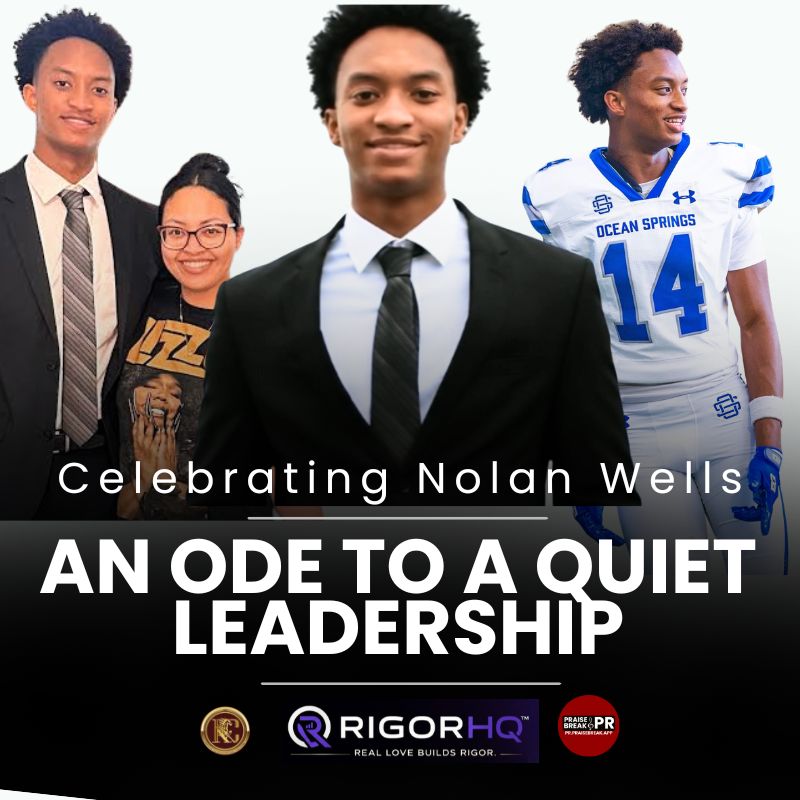
The Quiet Leader
Some leaders never stand behind podiums. They never become household names, write bestselling books, or command large audiences. Their leadership is revealed instead through character, consistency, compassion, and quiet influence. According to family, friends, and teammates, Nolan Wells was one of those people. He was remembered as a young man with a generous spirit, a college student committed to improving his future, and someone whose steady presence positively influenced those around him.
His death has understandably prompted grief, unanswered questions, and calls for a thorough investigation. While investigators continue their work, his life itself deserves reflection. Sociology teaches us that the ordinary experiences of everyday people often reveal extraordinary truths about a society. Nolan Wells's story challenges us to consider what it means to pursue education, friendship, and community while carrying the realities of race in America.
The Sociology of Quiet Leadership
Leadership is frequently measured by visibility. Yet sociology reminds us that communities are sustained by people whose influence is largely unseen. Families, schools, churches, athletic teams, and neighborhoods depend upon individuals who quietly build trust, encourage others, and model responsibility.
Nolan Wells has been described as such a person. His aspirations toward education, athletics, and family reflected goals shared by countless young adults seeking opportunity rather than conflict. His life reminds us that leadership often appears in everyday faithfulness long before it appears in public recognition.
For Black communities in particular, quiet leadership has historically carried profound significance. Many of the builders of neighborhoods, churches, schools, and civic institutions were not nationally celebrated figures but ordinary people who lived with extraordinary perseverance.
An Ethnography of Shared Space
Ethnography asks how people experience culture through everyday life. One of its central questions concerns belonging. Who feels welcomed? Who feels watched? Who feels safe? Who feels vulnerable?
The public discussion surrounding Nolan Wells has included broader questions about race and shared public environments. Those conversations extend beyond one individual case. They invite examination of how historical memory shapes present experience.
For many Black Americans, entering unfamiliar spaces has never been merely a matter of geography. It often involves reading social cues, evaluating risk, and navigating visible and invisible boundaries formed by generations of historical experience. This reality does not mean every encounter is dangerous, nor does it imply suspicion toward every person. Rather, it acknowledges that social history continues to influence how communities interpret safety and belonging.
The question therefore becomes larger than one investigation:
Can every young person pursue friendship, education, recreation, and community without fear that race will alter how their presence is perceived or their disappearance investigated?
A Theology of Human Worth
Theology begins with a fundamental conviction: God hears the cries of those whose suffering is overlooked. Scripture repeatedly portrays God as attentive to those whom society neglects.
From the blood of Abel crying from the ground (Genesis 4:10), to Israel's deliverance from oppression (Exodus 3:7-8), to the prophetic calls for justice (Amos 5:24), and finally to the ministry of Jesus among those pushed to the margins (Luke 4:18-19), the biblical narrative consistently reveals a God whose justice is inseparable from compassion.
This theological vision does not prejudge legal investigations. Rather, it insists that every human life possesses sacred dignity because every person bears the image of God (Genesis 1:26-27). The value of Nolan Wells's life is therefore not determined by media attention, public debate, or social status. His worth was established long before these events unfolded.
Does God See Quiet Leaders?
One of Scripture's recurring themes is that God notices those whom society often overlooks.
David was tending sheep when Samuel arrived (1 Samuel 16). Moses spent decades in obscurity before his calling (Exodus 3). Mary of Nazareth lived outside positions of political power before becoming central to salvation history (Luke 1). Jesus Himself spent most of His earthly life in ordinary labor before His public ministry.
The Kingdom of God repeatedly elevates lives that human systems underestimate.
For families grieving loss, this truth does not erase pain. Yet it offers profound assurance that quiet faithfulness is never invisible before God.
Beyond Suspicion Toward Community
Public conversations surrounding this case have raised difficult questions about interracial friendship, trust, and shared spaces. These conversations require both honesty and wisdom.
History teaches that racial violence has left enduring scars within American society. At the same time, healthy communities cannot be built upon perpetual suspicion alone. Justice requires careful investigation grounded in evidence, while reconciliation requires truth, accountability, and mutual dignity.
Communities flourish when every person can participate without fear and when every loss receives equal attention, equal investigation, and equal compassion.
Toward a Society That Honors Every Life
The lasting legacy of Nolan Wells should not rest solely upon unanswered questions surrounding his death. It should also inspire renewed commitment to creating communities where young people can pursue education, friendship, leadership, and hope without unnecessary fear.
Every institution shares responsibility:
Families that nurture character.
Schools that cultivate belonging.
Churches that proclaim human dignity.
Civic leaders who pursue justice.
Journalists who report carefully.
Investigators who follow evidence wherever it leads.
These responsibilities transcend race because they ultimately concern the sacred worth of every human being.
An Ode To Quiet Leadership
Today we remember the life of this "Quiet Leader." Whether remembered as a student, athlete, son, teammate, or friend, Nolan Wells represents more than a headline. He reminds us that quiet leaders shape the moral fabric of communities long before history records their names.
The eyes of God remain fixed upon every life created in His image. Where injustice exists, Scripture calls for truth. Where grief exists, God offers comfort. Where questions remain, faithful communities continue seeking both justice and mercy.
The highest tribute to Nolan Wells is not merely remembering how he died. It is building a society in which every young person, regardless of race, may confidently pursue education, friendship, purpose, and life itself, knowing that their dignity is recognized by both humanity and God.
Keep reading
 Reportedpartner
One Gospel, Two Histories: Why African and African American Christians Often See Politics Differently
African and African American Christians share one Gospel while carrying different historical memories. This editorial explores persecution, justice, political theology, and why deeper theological formation is essential for faithful global Christian dialogue.
 Reportedpartner
Convocation Superseason: Denominational Gatherings, Sacred Learning, and the Formation of the Church
Every year, denominational gatherings unite thousands of believers for worship, theological learning, leadership development, and fellowship. This editorial explores the biblical foundation, practical value, and enduring significance of convocation season across the Christian Chu
 Reportedpartner
Not Everyone Following You Is Following You: Toxic Followers Chronicles
Not everyone who follows a leader is following to learn. This editorial explores toxic followership, intellectual property, ethical competition, discernment, governance, and biblical stewardship for Christian leaders navigating ministry, publishing, business, and the digital age.
Loading comments…